
Blog
Benefits and Risks of Baby Circumcision
My experience and approach to understanding the benefits, risks and considerations of circumcision in babies
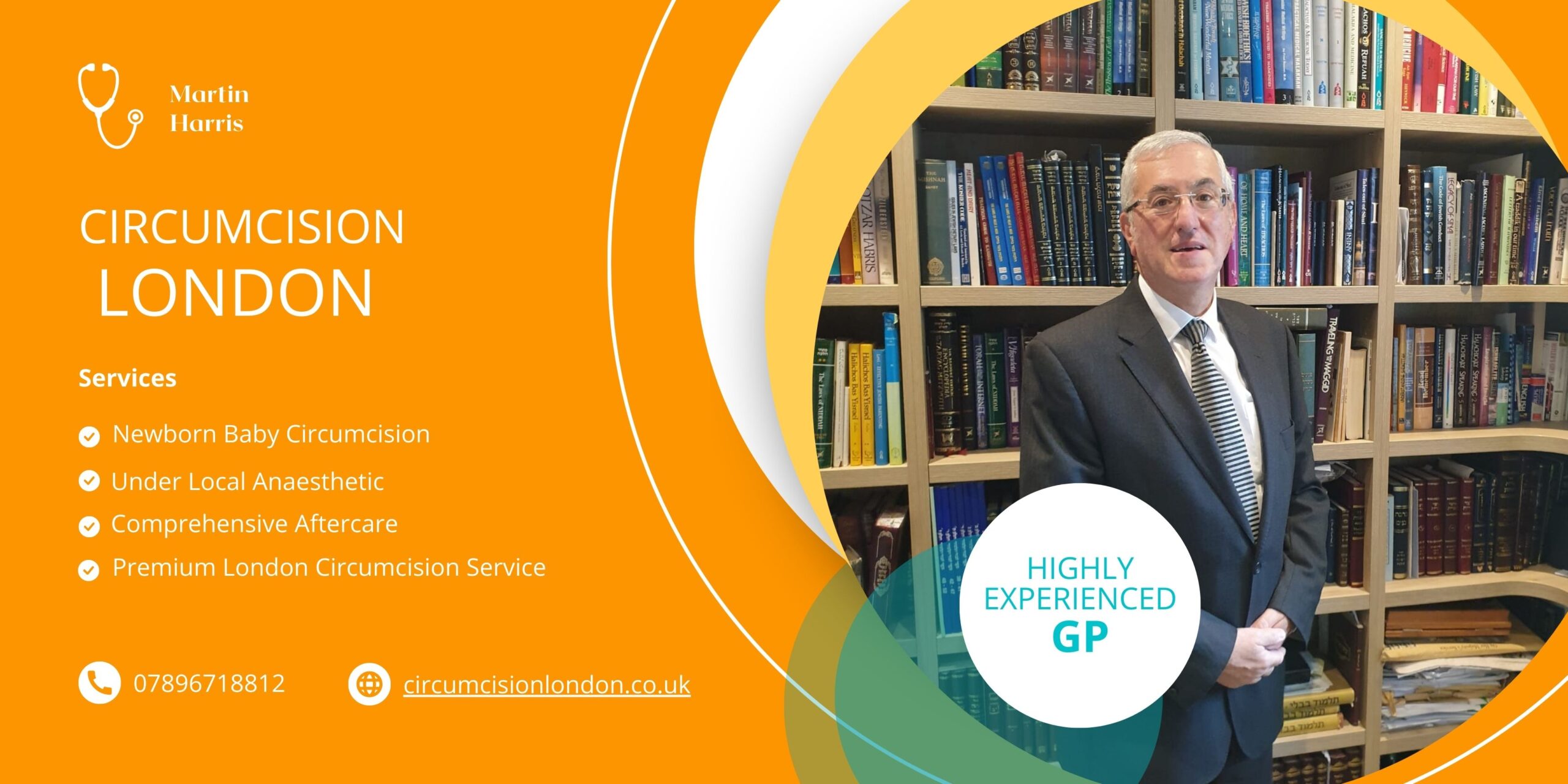
Written by Dr Martin Harris BPharm Hons, MB BS, LRCP MRCS FRCGP RCPathMe
Dr Martin Harris has extensive experience in baby circumcision and has been involved in helping parents understand the procedure, its potential benefits and risks, and the importance of appropriate medical assessment and aftercare.
Baby circumcision is the surgical removal of the foreskin, the fold of skin that covers the head of the penis, also known as the glans.
There are many different reasons why parents request baby circumcision. These may include social, cultural, family, religious and medical reasons. For some families, circumcision is an important part of their religious tradition. For others, it is a longstanding family practice, a personal preference or a decision influenced by potential health benefits.
Over the years, I have spoken to many parents who want to understand the benefits and risks of baby circumcision before making their decision.
Some parents have already decided that they want their baby circumcised but wish to understand the medical aspects of the procedure. Others are still considering their options and want to know whether circumcision offers health benefits beyond their personal or religious reasons.
My approach has always been to explain the procedure carefully, answer parents’ questions and help them understand what the medical evidence does and does not show.
Circumcision can offer certain health benefits, but it is not medically necessary for every baby. Many boys who are not circumcised grow up without significant foreskin problems, and an uncircumcised penis can be perfectly healthy.
At the same time, there are recognised benefits associated with circumcision, including a reduced risk of certain infections and the elimination of some conditions affecting the foreskin.
The decision needs to take account of these potential benefits, the risks of surgery, the baby’s individual medical circumstances and the reasons why the parents are considering the procedure.
For me, responsible baby circumcision begins with good information, appropriate assessment and a clear understanding of what the procedure involves.
Benefits and Risks of Baby Circumcision: Key Points
For parents considering circumcision for their baby, the main points to understand are:
- Reduced risk of urinary tract infections: Circumcision reduces the risk of urinary tract infections, particularly during infancy. However, the absolute risk is low for most healthy babies.
- Fewer foreskin-related conditions: Removing the foreskin eliminates the possibility of developing conditions such as pathological phimosis affecting that foreskin.
- Reduced risk of certain inflammatory conditions: Circumcision may reduce the likelihood of some forms of balanitis and balanoposthitis.
- Simpler genital hygiene: There is no foreskin to retract or clean underneath after circumcision has healed, although an uncircumcised penis can also be kept clean with appropriate care.
- Potential longer-term health benefits: Research has identified protective effects against certain sexually transmitted infections in particular populations, although these findings should not be interpreted as complete protection.
- Potential treatment for medical conditions: Circumcision may be appropriate when a child has a significant foreskin condition that requires surgery.
- The importance of appropriate pain relief: Baby circumcision is a surgical procedure and requires suitable anaesthesia or analgesia.
- Bleeding and infection risks: These are important complications to discuss before the procedure.
- Individual medical assessment: A baby’s general health, penile anatomy and personal or family history of bleeding disorders must be considered.
- The decision is irreversible: Once the foreskin has been removed, it cannot simply be restored to its original state.
The most important principle is that parents should understand both the potential benefits and the possible complications before deciding whether circumcision is right for their baby.
Why Parents Choose Baby Circumcision
In my experience, parents request baby circumcision for several different reasons, and these reasons are not always exclusively medical.
Religious reasons
For many families, circumcision is an important religious practice and a significant part of welcoming a baby into their community.
The timing and circumstances of the procedure may be influenced by religious teachings, family traditions and the wishes of the parents.
Cultural and family reasons
Circumcision is customary in many cultures and communities around the world.
Some parents choose circumcision because it is an established family practice or because they wish their son to share a tradition followed by other male members of the family.
Social and personal reasons
Some parents consider circumcision because they would like their son to have a similar appearance to his father or other close family members.
Others have personal preferences concerning genital appearance, hygiene or the practical aspects of caring for an uncircumcised or circumcised penis.
These considerations are personal and may differ considerably between families.
Medical reasons
Some parents are particularly interested in the potential health benefits of circumcision.
Others may have received medical advice because of a specific condition affecting their baby or a relevant family medical history.
It is important to distinguish circumcision requested for general preventive or personal reasons from circumcision recommended to treat an established medical problem.
The reasons for circumcision may influence the decision, but the baby’s suitability for the procedure and the importance of safe clinical practice remain central.
What Are the Medical Benefits of Baby Circumcision?
The potential medical benefits of circumcision vary according to the child’s circumstances.
Some relate to infancy and childhood, while others concern possible health risks later in life.
I find it helpful to consider each benefit separately rather than treating circumcision as a procedure that provides the same advantages to every child.
1. Reduced Risk of Urinary Tract Infections
One of the best-studied potential benefits of circumcision is a reduction in urinary tract infections, commonly known as UTIs.
A urinary tract infection occurs when bacteria enter and multiply within the urinary system.
In babies, a UTI can sometimes cause non-specific symptoms such as fever, irritability, poor feeding or vomiting. A baby with a suspected infection requires appropriate medical assessment.
Research has found that circumcised boys have a lower risk of urinary tract infections, particularly during infancy.
However, it is important to understand the difference between relative risk and absolute risk.
Although circumcision reduces the relative risk of a UTI, most healthy boys have a low starting risk. Consequently, the absolute benefit for an otherwise healthy baby may be modest.
The potential benefit may be more significant for boys with certain urinary tract abnormalities or a history of recurrent infections.
For these children, circumcision may sometimes form part of a wider medical management plan, following discussion with the appropriate paediatric specialist.
I would not advise parents to regard circumcision as a substitute for investigating or treating a urinary tract infection.
The important point is that circumcision can reduce the risk of UTIs, but it does not eliminate the possibility of infection.
2. Fewer Problems Affecting the Foreskin
Another potential benefit is that circumcision removes the foreskin and therefore eliminates the possibility of developing certain conditions that specifically affect it.
One example is pathological phimosis.
Phimosis describes a foreskin that cannot be retracted over the glans. However, in babies and young boys, a non-retractable foreskin is usually a normal part of development.
The foreskin is often naturally attached to the glans in infancy and gradually separates as the child grows. In some boys, full retraction does not occur until adolescence.
Parents should never attempt to force the foreskin backwards, as this can cause pain, injury and scarring.
Pathological phimosis is different. It can develop when inflammation or a skin condition causes scarring and abnormal tightening of the foreskin.
In these circumstances, a child may experience recurrent inflammation, discomfort or difficulty passing urine.
Depending on the diagnosis, treatment may involve observation, prescribed medication or surgery.
Circumcision eliminates the possibility of future phimosis affecting the removed foreskin. However, this does not mean that a healthy baby needs circumcision simply because the foreskin does not retract.
This distinction is particularly important when advising parents of newborn babies.
3. Reduced Risk of Balanitis and Foreskin Inflammation
Balanitis is inflammation of the glans, the head of the penis. When the foreskin is inflamed as well, the condition is sometimes called balanoposthitis.
Symptoms can include redness, swelling, soreness, irritation and discharge.
Possible causes include infection, irritation and underlying skin conditions.
Circumcision removes the foreskin and may reduce the likelihood of some foreskin-related inflammatory problems.
For older boys who experience recurrent balanitis or balanoposthitis, circumcision may be considered when appropriate conservative treatments have not provided adequate relief.
However, occasional redness or irritation does not automatically mean that circumcision is necessary.
Gentle hygiene, avoiding irritants and treating the underlying cause may be sufficient in many cases.
For babies, parents should seek medical advice if they notice significant swelling, persistent redness, discharge, fever or difficulty passing urine.
The potential benefit of circumcision is most relevant when there is a genuine medical problem, rather than occasional mild irritation.
4. Simpler Genital Hygiene
Hygiene is another reason parents sometimes choose baby circumcision.
Once circumcision has healed, there is no foreskin to retract or clean underneath.
Some parents find this simpler when caring for their baby and teaching their son personal hygiene as he grows older.
However, I believe it is important to be clear that an uncircumcised penis is not inherently unclean.
An uncircumcised penis can be kept clean with straightforward, age-appropriate care.
In babies and young boys, the outside of the penis should be washed gently. The foreskin should not be forcibly retracted.
As the foreskin separates naturally and becomes retractable, the child can gradually learn to retract it gently, rinse underneath with water and return it to its normal position.
Both circumcised and uncircumcised boys need appropriate personal hygiene.
Circumcision may simplify certain aspects of cleaning, but it does not remove the need for normal hygiene or guarantee freedom from irritation and infection.
5. Potential Protection Against Certain Sexually Transmitted Infections
Medical research has identified protective effects of male circumcision against certain sexually transmitted infections.
Studies conducted in several sub-Saharan African countries with high rates of heterosexual HIV transmission found that medical male circumcision reduced the relative risk of acquiring HIV through heterosexual sex by approximately 50–60% in the populations studied.
These findings led the World Health Organization to support voluntary medical male circumcision as one component of comprehensive HIV prevention programmes in appropriate high-prevalence settings.
Circumcision has also been associated with a reduced risk of certain other infections, including some HPV infections and genital herpes, although the strength of the evidence varies.
There are important limitations to these findings.
The evidence concerning HIV prevention comes largely from particular adult populations and settings. The findings should not be interpreted as a guarantee of protection for an individual or as evidence that circumcision prevents every sexually transmitted infection.
Condoms, appropriate testing, vaccination where available and other recommended preventive measures remain important.
For parents considering circumcision for a baby, these potential future benefits are part of the wider medical discussion. They should not be presented as guaranteed benefits for every child.
6. Potential Reduction in the Risk of Penile Cancer
Penile cancer is rare.
Some research has associated circumcision with a reduced risk of penile cancer in particular circumstances.
Factors associated with penile cancer include certain HPV infections, smoking and some chronic inflammatory or scarring conditions affecting the penis.
Circumcision may reduce risks associated with certain foreskin-related conditions, but the evidence does not establish that every boy should be circumcised to prevent cancer.
Most uncircumcised men will never develop penile cancer.
The potential benefit is therefore best understood as a possible reduction in an already uncommon risk, rather than a reason to regard circumcision as essential cancer prevention.
7. Circumcision as a Treatment for Certain Medical Conditions
So far, I have discussed potential benefits for babies who may otherwise have a healthy foreskin.
Circumcision also has an established role in treating certain medical conditions in children.
Examples include:
- Pathological phimosis: Abnormal foreskin tightness associated with scarring and symptoms.
- Recurrent balanitis or balanoposthitis: Repeated inflammation affecting the glans and foreskin, particularly when other treatments have been unsuccessful.
- Certain cases of lichen sclerosus: An inflammatory skin condition that can cause scarring and tightening of the foreskin.
- Selected urinary tract problems: Circumcision may be considered for children with recurrent infections or particular urinary tract abnormalities when clinically appropriate.
Not every foreskin problem requires circumcision.
Depending on the child’s age, diagnosis and symptoms, observation, prescribed topical medication or foreskin-preserving procedures may be suitable alternatives.
For a newborn baby, it is particularly important not to confuse normal foreskin development with a medical condition requiring treatment.
When circumcision is being considered for a medical reason, the appropriate clinician should explain the diagnosis, available treatments and reasons for recommending surgery.
What Are the Risks of Baby Circumcision?
Any discussion of the benefits of baby circumcision must also include the risks.
Circumcision is a surgical procedure. Although many procedures are completed without significant complications, problems can occur even when the procedure is performed by an appropriately trained practitioner.
The risks depend on the baby’s health, the technique used, the practitioner’s training and experience, pain management and the quality of aftercare.
The main risks include the following.
Bleeding
Bleeding is one of the most important potential complications.
A small amount of bleeding may occur, but persistent or significant bleeding requires prompt medical assessment.
A personal or family history of abnormal bleeding must be considered before circumcision. If a bleeding disorder is suspected, further assessment may be necessary before the procedure is undertaken.
Infection
Infection can develop at the surgical site.
Parents should receive clear instructions about wound care and the signs that require medical attention.
Increasing redness, worsening swelling, discharge, fever or a baby who appears unwell should prompt medical advice.
Pain and discomfort
Circumcision causes tissue injury and can be painful.
Appropriate anaesthesia or analgesia is essential. Parents should ask what pain-relief measures will be used during the procedure and what care will be recommended afterwards.
A baby should not undergo circumcision on the assumption that newborns do not experience pain.
Swelling and bruising
Some swelling and local bruising may occur during healing.
Parents should be given information about what is expected and what signs may indicate a complication.
Severe or increasing swelling, significant changes in colour or difficulty passing urine require urgent assessment.
Problems with healing or the cosmetic result
The amount of foreskin removed and the way the wound heals can affect the final appearance.
Possible complications include adhesions, skin bridges, uneven healing or removal of too much or too little skin.
Occasionally, further treatment or surgery may be required.
Rare but serious complications
More serious complications, including injury to the penis or the urinary opening, are uncommon but possible.
Parents should understand that no surgical procedure can be guaranteed to be completely risk-free.
The procedure is irreversible
Circumcision permanently removes the foreskin.
Unlike many other childhood procedures, it cannot simply be reversed if the individual later wishes that the foreskin had been preserved.
This is an important consideration when parents are making a decision on behalf of a baby who cannot yet express his own views.
I believe parents should be given the time and information they need to understand this before consenting to the procedure.
Is Baby Circumcision Painful?
Yes. Circumcision involves cutting and removing tissue, so appropriate pain management is essential.
A newborn baby can experience pain, and the procedure should never be undertaken on the assumption that a baby will not feel it.
Depending on the clinical setting and technique, suitable local anaesthesia may include a penile nerve block or another recognised method of local anaesthetic administration.
The exact approach should be determined by an appropriately trained practitioner, taking account of the baby’s age, health and the planned procedure.
Comfort measures may also be used alongside anaesthesia, but they should not replace effective pain relief.
Parents should ask the practitioner to explain the anaesthetic method, how pain will be managed during circumcision and what measures will be recommended during recovery.
Appropriate pain management is a fundamental part of responsible baby circumcision.
Is Baby Circumcision Safer When Performed Early?
Parents often ask whether there is an advantage to having their baby circumcised in early infancy rather than waiting until later childhood.
There are practical considerations that may make infancy a convenient time for families who have already decided on circumcision.
For example, parents can supervise the baby’s recovery, and an appropriately selected infant may be suitable for a procedure using local anaesthesia.
However, it would be misleading to suggest that early circumcision is automatically safer for every baby.
Safety depends on the child’s individual circumstances, the procedure used, appropriate pain relief and the practitioner’s competence.
Some babies are not suitable for circumcision at the time their parents initially request it.
A baby who is unwell, has a suspected bleeding disorder or has certain penile anatomical abnormalities may require further assessment or a different plan.
Conditions such as hypospadias, in which the urinary opening is not in its usual position, are particularly important because the foreskin may be needed for reconstructive surgery.
Parents should therefore not assume that every newborn baby is automatically suitable for circumcision.
A proper assessment should take place before the procedure is undertaken.
When Should Baby Circumcision Be Delayed?
There are circumstances in which it may be appropriate to postpone circumcision until further assessment has taken place or the baby is medically suitable.
These include:
- A known or suspected bleeding disorder.
- A significant family history of abnormal bleeding that has not been appropriately assessed.
- An illness or medical condition that makes the timing of the procedure unsuitable.
- An anatomical abnormality of the penis that requires specialist assessment.
- Uncertainty about whether the baby is medically suitable for the planned procedure.
Some babies may need specialist advice before a decision can be made.
For example, a family history of haemophilia or another inherited bleeding disorder should not be overlooked simply because the baby appears healthy.
Similarly, an anatomical abnormality may affect whether circumcision is appropriate at all.
The purpose of assessment is not to create unnecessary anxiety for parents. It is to identify relevant concerns before the procedure and ensure that an appropriate plan is in place.
My Approach to Assessing a Baby Before Circumcision
In my experience, good preparation begins well before the day of the procedure.
Before proceeding, I consider the baby’s general health, medical history and the information available from the parents.
Important questions include:
- Was the baby born at term, and is he currently well?
- Is there a personal or family history of abnormal bleeding?
- Has the baby been diagnosed with any medical condition that may affect the procedure?
- Has the penis been examined for anatomical abnormalities?
- Has the baby received vitamin K as recommended at birth, and is there any relevant concern about its administration?
- Is there any reason to seek further medical assessment before proceeding?
- Do the parents understand the procedure, the risks and the aftercare requirements?
The precise assessment will depend on the baby’s circumstances.
If there is a concern about bleeding, an anatomical abnormality or another medical problem, I would not regard it as appropriate to proceed without the necessary assessment.
For me, this is an essential part of responsible circumcision practice.
The procedure itself is only one part of the care provided to a baby.
Looking After Your Baby After Circumcision
Aftercare is an important part of the circumcision process.
Parents should receive clear instructions about how to care for the wound, what to expect during healing and who to contact if they are concerned.
Some redness, tenderness and swelling may occur, but the appearance of the penis should gradually improve as healing progresses.
The precise aftercare instructions depend on the technique used and the practitioner’s clinical advice.
Parents should not apply unprescribed medicines, antiseptics or other products to the wound without checking that they are appropriate.
It is also important to follow the instructions provided about nappies, cleaning and any recommended protective ointment or dressing.
When should parents seek medical advice?
Parents should seek prompt medical advice if their baby develops:
- Bleeding that continues or appears significant.
- Increasing redness, swelling or pain.
- Pus or concerning discharge from the wound.
- A fever or signs that the baby is unwell.
- Difficulty passing urine or an unusual reduction in urine output.
- A significant change in the colour or appearance of the penis.
Significant bleeding, inability to pass urine or other serious symptoms require urgent assessment.
Parents should be told in advance whom to contact if they have concerns after the procedure.
Good aftercare is not an optional extra. It is part of the overall management of the baby.
Is Baby Circumcision Necessary for Every Boy?
No.
Many boys who are not circumcised remain healthy throughout their lives.
In babies and young children, the foreskin is often naturally non-retractable. This is usually a normal developmental feature rather than a medical problem.
Most foreskin conditions can be managed without surgery, and circumcision is generally reserved for particular medical indications when the expected benefits justify the procedure.
The NHS offers circumcision for medical reasons, such as certain recurrent infections or problems caused by a tight, scarred foreskin, usually when other treatments have not worked or are unsuitable.
Circumcision requested for religious, cultural, family, social or personal reasons is a separate decision from circumcision recommended to treat an established medical condition.
Parents should understand this distinction and should not feel that every healthy baby needs circumcision to maintain good hygiene or avoid future illness.
The decision should be made with a clear understanding of the reasons for the procedure, its potential benefits, its risks and the available alternatives.
If You Are Considering Baby Circumcision
If you are considering circumcision for your baby, I would encourage you to ask questions and make sure you understand the procedure before arranging it.
The questions I would want parents to consider include:
- What are the main reasons for considering circumcision?
- Are there any medical concerns that need to be assessed first?
- Has the baby been examined for anatomical abnormalities?
- Is there a family history of bleeding disorders?
- What anaesthetic or pain-relief method will be used?
- What training and experience does the practitioner have?
- What are the possible complications?
- What aftercare will be provided?
- Who should parents contact if they are concerned after the procedure?
Parents should also feel comfortable asking about the practitioner’s experience, the setting in which circumcision will be performed and the arrangements for dealing with unexpected complications.
If the procedure is being considered for a medical reason, the diagnosis and available treatment options should be explained.
If it is being requested for religious, cultural, family or personal reasons, parents should still receive appropriate medical information and an assessment of their baby’s suitability.
The aim is to ensure that the decision is informed and that the baby’s wellbeing remains central throughout the process.
Frequently Asked Questions
What are the main benefits of baby circumcision?
The main potential benefits include a reduced risk of urinary tract infections during infancy, fewer conditions affecting the foreskin, a reduced risk of some inflammatory problems and simpler genital hygiene.
Research has also identified protective effects against certain sexually transmitted infections in particular populations.
The significance of these benefits varies, and circumcision is not medically necessary for every healthy baby.
Why do parents choose baby circumcision?
Parents request baby circumcision for many reasons, including social, cultural, family, religious and medical considerations.
Some families follow an established religious tradition, while others are influenced by family practice, personal preference or potential health benefits.
The reasons vary between families, and parents should receive balanced information about the procedure regardless of their motivation.
Is baby circumcision medically necessary?
Not usually for a healthy baby with a normal penis.
Many uncircumcised boys remain healthy and never develop significant foreskin problems.
Circumcision may be recommended for particular medical conditions, but normal non-retractability of the foreskin during infancy is not, by itself, a reason for surgery.
Does circumcision prevent urinary tract infections?
Circumcision reduces the risk of urinary tract infections, particularly during infancy. However, most healthy boys have a low absolute risk of developing a UTI, and circumcision does not eliminate the possibility of infection.
The potential benefit may be more significant in babies with particular urinary tract abnormalities or a history of recurrent infections.
Is circumcision better for hygiene?
Circumcision removes the need to clean underneath the foreskin, which some parents may find convenient.
However, an uncircumcised penis can also be kept clean with appropriate care. The foreskin should never be forcibly retracted in a baby or young child.
Is baby circumcision painful?
Yes. Circumcision involves removing tissue and can cause pain.
Appropriate anaesthesia or analgesia is essential. Parents should ask the practitioner how pain will be managed during the procedure and what measures will be recommended afterwards.
What are the risks of baby circumcision?
Potential complications include bleeding, infection, pain, swelling, problems with healing, adhesions and an unsatisfactory cosmetic result. Rarely, more serious injury can occur.
The procedure is irreversible, and some complications may require further treatment.
Parents should understand these risks before consenting to circumcision.
Should every baby be circumcised in the first few weeks of life?
No. There is no requirement for every healthy baby to be circumcised.
For families who have decided on circumcision, early infancy may offer practical advantages, but the baby must first be assessed to ensure that the procedure is appropriate.
The timing should take account of the baby’s health, anatomy and any relevant medical concerns.
Can circumcision be delayed if there is a family history of a bleeding disorder?
Yes. Further assessment may be necessary before circumcision is considered.
A family history of haemophilia, Factor XI deficiency or another inherited bleeding disorder should be discussed with the appropriate medical team. The decision to proceed should not be based on the baby’s appearance alone.
Does circumcision prevent all infections?
No. Circumcision may reduce the risk of certain infections, but it does not prevent every urinary, genital or sexually transmitted infection.
Appropriate hygiene, vaccination where indicated, medical assessment and other preventive measures remain important.
What should parents do if they are unsure whether to circumcise their baby?
Parents should take the time to understand the procedure and consider their reasons for requesting it.
They should receive clear information about potential benefits, risks, alternatives and aftercare, and should ask an appropriately qualified healthcare professional about any medical concerns.
The decision should be made without unnecessary pressure and with the baby’s wellbeing as the central consideration.
My Final Message to Parents
I understand that baby circumcision can be a very important decision for families.
For some parents, it is an essential part of their religious or cultural tradition. For others, it reflects family practice, personal preference or an interest in the potential health benefits.
Whatever the reason, I believe that parents deserve clear and balanced information before proceeding.
Circumcision has recognised potential medical benefits, including a reduced risk of urinary tract infections in infancy and the elimination of certain foreskin-related conditions.
However, the benefits should not be exaggerated, and it is important to acknowledge that many uncircumcised boys remain healthy throughout their lives.
Circumcision is a surgical procedure with potential complications, and it permanently removes the foreskin. The baby must be medically suitable, appropriate pain relief must be provided, and parents should receive clear aftercare instructions.
My approach is to ensure that parents understand what the procedure involves, that relevant medical concerns are identified beforehand and that the baby’s care is planned responsibly.
For me, the central principles are straightforward:
Understand the reasons. Assess the baby. Explain the benefits and risks. Provide appropriate pain relief. And put the baby’s wellbeing first.
Medical Information Disclaimer
This article is provided for general educational information and describes the potential benefits and risks of baby circumcision. It is not an individual treatment plan or a substitute for advice from an appropriately qualified healthcare professional.
Circumcision is an irreversible surgical procedure. Its potential benefits and risks vary according to the baby’s age, medical history, anatomy, the technique used and the clinical circumstances.
Parents considering circumcision should understand the procedure, possible complications, alternatives where relevant, pain management and aftercare before making a decision.
Babies with a known or suspected bleeding disorder, significant medical problems or penile anatomical abnormalities may require further assessment before circumcision is considered.
If a baby develops significant bleeding, severe swelling, a concerning change in the colour of the penis or an inability to pass urine following circumcision, urgent medical assessment is required.
Last medically reviewed: October 2026
References and Further Reading
- NHS — Circumcision: Information about the procedure, medical indications, recovery and possible complications.
https://www.nhs.uk/tests-and-treatments/circumcision/ - NHS — Tight foreskin (phimosis): Information about normal foreskin development and the management of foreskin problems.
https://www.nhs.uk/conditions/phimosis/ - Cambridge University Hospitals NHS Foundation Trust — Circumcision in boys: Patient information about medical indications and the procedure.
https://www.cuh.nhs.uk/patient-information/circumcision-in-boys/ - World Health Organization — Voluntary Medical Male Circumcision: Guidance and evidence concerning male circumcision as one component of HIV prevention in appropriate settings.
https://www.who.int/teams/global-hiv-hepatitis-and-stis-programmes/hiv/prevention/voluntary-medical-male-circumcision - American Academy of Pediatrics — Circumcision Policy Statement, Pediatrics (2012): A review of potential health benefits and risks of newborn male circumcision.
https://doi.org/10.1542/peds.2012-1989
HOURS
Monday - Friday
9 am–6 pm
Saturday - Sunday
Closed
Copyright @Circumcision London